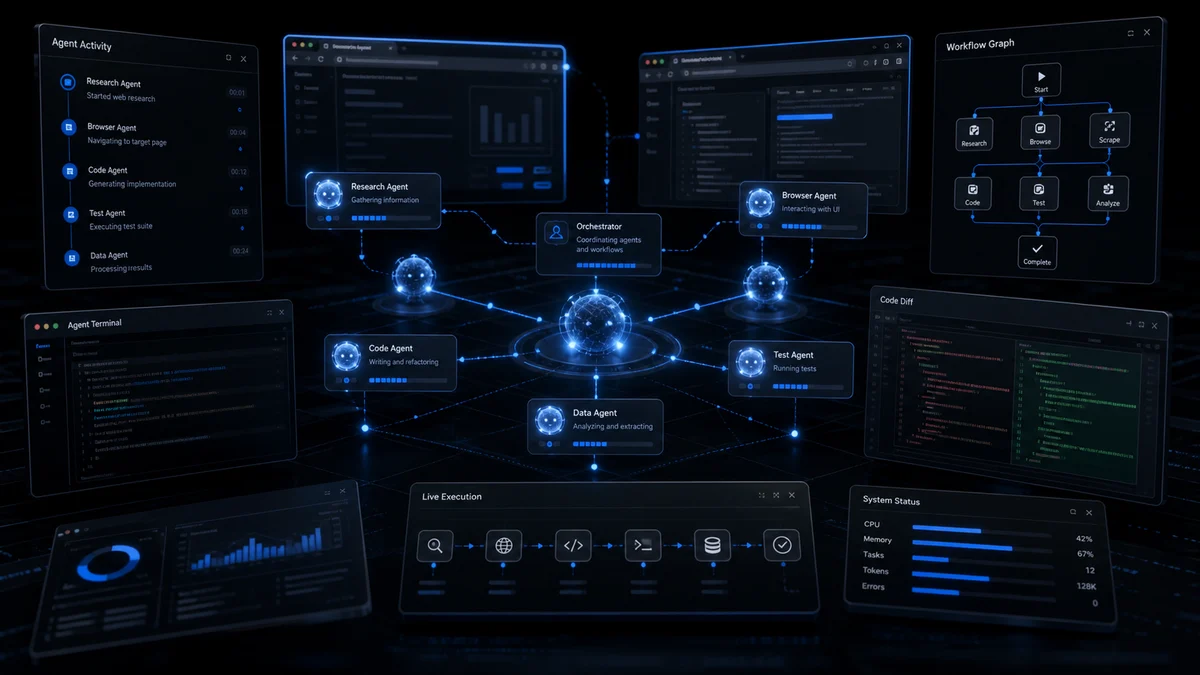
AI is no longer just answering prompts. It is learning to operate interfaces, write code, run tests, and complete workflows.
Category: Agentic AI
Window: Jan 2025 to 2026
The most important AI shift of 2025 was not just "better chat." It was the move from assistants that respond to agents that act.
OpenAI's Operator preview introduced a computer-using agent that could interact with graphical user interfaces: buttons, menus, forms, and browsers using vision plus reasoning. That changed the interface assumption: instead of every product needing an API-first integration, AI could start using software the way humans already do.
For engineers, this is a massive unlock. The next layer of AI products will not just summarize information; they will execute controlled tasks, verify outcomes, and escalate when confidence is low. Anthropic's Claude Code and OpenAI's Codex direction push this even further into software engineering: agents reading codebases, editing files, running tests, and working in parallel.
My take: the winning AI engineer will not simply prompt models. They will design guardrails, evals, permission layers, and recovery loops around agents.